
Squad
Leadership Runs Through the Amsterdam Flames
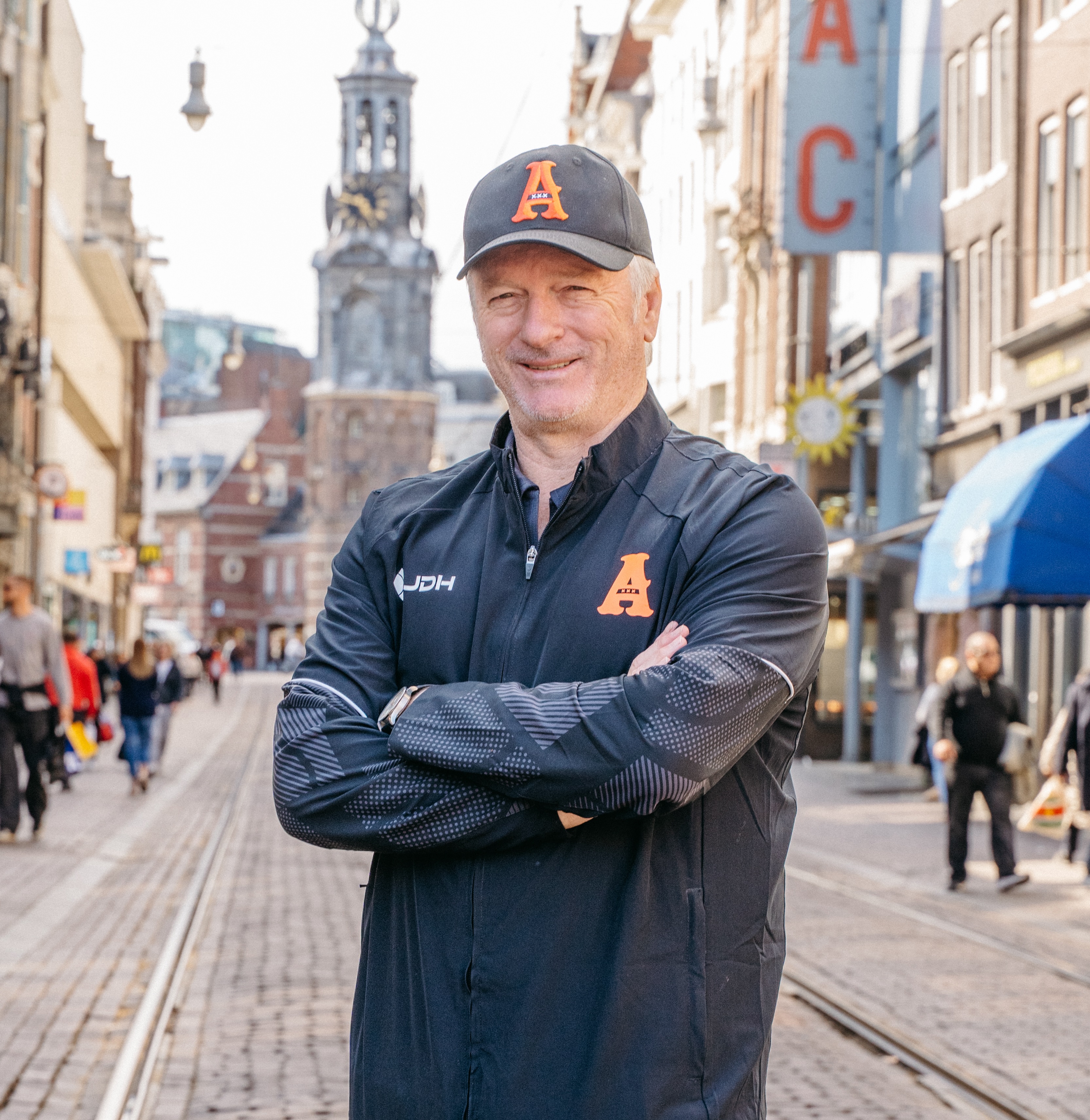
By Subas Humagain
Newly formed franchises spend a lot of time searching for an identity and leadership. Identifying individuals capable of establishing standards, managing pressure and bringing together players from different countries and cricketing cultures is a key part of building a team. This is even more important in the first season, as the individuals and the team are going to be in the history books. In Amsterdam Flames, that seems to be an easy task.
With owners who led their nation to World Cup glory as players, coaches with experience of leading their national teams and a playing group filled with current national captains, the Flames will begin their European T20 Premier League journey with leadership embedded at every level. This may prove to be one of Amsterdam's greatest strengths when the season begins with the Dutch Derby against Rotterdam Dockers on August 26.
The leadership chain begins with the ownership group, led by people who understand the demands of elite sport. Steve Waugh and Jamie Dwyer captained Australia to World Cup glory in cricket and hockey respectively. Tim Thomas, a name perhaps less familiar in sporting circles, brings more than two decades of business leadership experience across the Asia-Pacific region.
Waugh, the Amsterdam Flames Co-founder and Chief Cricket Officer, is one of the most coveted leaders in the history of the game. He captained Australia in 57 Tests, winning 41, and led the side to the 1999 ICC Cricket World Cup title. His Australian team became renowned not only for winning matches but also for an approach that was very new at the time. The mental side of the game, which was overlooked by most teams in the late 1990s, became a strength under Waugh's leadership. The team's ability to control the most pressurised moments often determined the outcome of closely contested matches.
Alongside him is Jamie Dwyer, an Olympic champion and one of the greatest field hockey players of all time. Dwyer represented Australia in 365 international matches, scored more than 240 goals and won Olympic gold, two World Cups and multiple Commonwealth Games and Champions Trophy titles. A record five-time FIH World Player of the Year, he also captained Australia during their victorious 2010 Commonwealth Games campaign.
This continues into the coaching group too. Head coach Ryan Cook was pivotal in making the Dutch national team a force to be reckoned with in world cricket. He changed the team's identity from that of a strong Associate side to one that often tested established nations to their limits and even produced significant performances at global tournaments. A huge advantage of Cook's appointment is that he already understands the core of the Flames squad, having worked with or planned against the players while with the Dutch team.
His assistants, JP Duminy and John Davison, add value to the coaching unit with their experience of leading their respective national teams during their playing days. Duminy captained South Africa in T20 international cricket and also led various franchise teams across the world. With over 300 matches for South Africa as a player and experience as a member of the backroom staff thereafter, he knows what the game demands when matches begin to move quickly during a tournament. Davison captained Canada at the 2007 Cricket World Cup and was a pioneering figure in helping Canadian cricket during its early days. He set the record for the fastest century in World Cup history back in 2003 as an Associate cricketer, long before T20 became a global phenomenon.
On the field, Steve Smith offers considerable experience of leading Australia across all three formats. There are not many cricketers in the modern game who possess a deeper understanding of batting under pressure, reading match situations or maintaining elite preparation standards.
Ajinkya Rahane's leadership record scaled new heights when he captained India to a historic Test series win in Australia in 2020–21, including the famous Gabba victory. He has led Mumbai to multiple domestic titles as well as captained multiple teams in the IPL. With so much success under his belt, his calmness and composure are often praised by his peers.
Bas de Leede, former national Under-19 captain, was handed the captaincy of the Dutch senior team after Scott Edwards decided to end his four-year tenure at the end of July. One of the world's leading all-rounders, not just on the Associate circuit but in the world game, his elevation to the captaincy is further recognition of his growing cricketing maturity and importance to the side.
Among all the distinguished leaders assembled in the team, Scott Edwards holds a particularly important place. Edwards ended one of the most significant captaincy tenures in Dutch cricket history just before he switched into Flames mode for the ETPL. Under Edwards, the Netherlands did not just participate in World Cups but made their mark. Wins over Test nations were no longer surprises, and participation in World Cups no longer required the hassle of going through qualification pathways. Edwards was not just leading the team but also delivering impactful performances throughout the journey, with his ability to bat in different conditions proving highly valuable. Be it an unbeaten 78 against South Africa in Dharamsala or 68 against Bangladesh at Eden Gardens, Edwards stood tall. With over 100 matches across formats under his belt, his ability to read the conditions and guide bowlers from behind the stumps will remain a key element for the Flames.
Michael Bracewell has captained New Zealand in both white-ball formats. With wins against heavyweights India and Pakistan in his first year as captain, he has set the bar high. His calm presence and tactical awareness add another international leader to the team.
This serves as an excellent opportunity for the younger players to be part of a dressing room where leadership can be observed at close range. Teenagers Yuvraj Samra and Jordan Neill will train alongside players who have led countries, won global titles and recovered from the highest levels of sporting adversity. Ali Hasan, Aryan Dutt and Kyle Klein, still in their early years as professionals, will build themselves around these experienced leaders.
This will not only help Amsterdam Flames grow but could also prove to be an asset to European cricket overall. The franchise is not only assembling players for a tournament. It is creating an environment in which the next generation can learn how elite teams communicate, prepare and respond to pressure.
Some teams appoint a captain. The Flames have built a team with leadership at its core and beyond.
Want to be part of it from day one?